Monday, November 2, 2009

Alice in den Stadten

23600_Alice-in-the-3

A German journalist, Philip Winter, wanders through America on a quest to uncover the secrets of the country, but soon finds himself in the midst of writers block, completely incapable of articulating what he sees most prevalent.  He carries with him a camera in an attempt to capture the essence of the places he visits, but a portfolio of polaroids fails to satisfy his seedy boss.  Winter is forced to return to Germany, and while booking a flight he meets a German woman and her nine year old daughter, Alice. 

The three of them spend the night together waiting for their flight, but soon the mother disappears and leaves Winter in sole possession of her daughter.  With the request of taking Alice to Germany, where the mother promises she will soon follow, Winter soon realizes that Alice is his responsibility for indefinitely longer than he anticipated (or hoped).  Once they arrive in Germany, Alice's memory falters as to their exact destination, leading them on a whimsical journey filled with innocence, disappointments, tears, and magical twists.

Wenders' black and white film includes striking cinematography that augments Winter's strategic framing of his carefree pictures.  The long, languid shots of American coasts and the juxtaposition of melancholy cafes and trains moving through busy cities is reflective of the transitory phases that punctuate this films surprising narrative.

The actors create and embody such realistic portrayals that it becomes impossible to separate oneself from their heart-twinging stories.  Alice perfectly captures the innocence of a child (more importantly the desperation of an abandoned child), and Philip Winter takes the audience through an uncertain progression of his ability to rise to the ever-increasing expectations.  Brilliantly crafted, just-so ambiguously ended, and wonderfully acted, Alice in den Stadten shows us that naivete is precariously negotiated by many ages, through many moments, and doesn't end with the rolling of the credits.

five.

Sunday, April 26, 2009

Achilles and the Tortoise

Achilles and the Tortoise is a Japanese film from Director Takeshi Kitano that follows the life of struggling artist, Machisu, orphaned after his father’s sudden suicide. His parents had indulged him as a creative genius, but once in the real world Machisu finds himself unable to compete artistically in a harsh and unsusceptible society. Stubbornly, he strives to create a masterpiece at the expense of everyone he holds dear.

The story is rooted in creativity and failure, but the narrative losses that Machisu suffers (first his father’s suicide, then his mother’s, then his best friend’s, then his other friend’s, then his daughter’s…) became so repetitive that it lost its capacity for emotional impact and seemed to turn the experience into satirical attack against those who chose such artistic pursuits.

The way that Machisu turns so coldly inhuman would, normally, be attributed to the severe emotional turmoil that life has delivered him, but Kitano blames it instead on the character’s artistic insanity that has left him ravaged and devoid of friends, love, fame, or fulfillment. All of the artworks featured in the film are drastically different from the mise-en-scene that surrounds them, emphasizing their ridiculous nature and obvious misplacement.

The title refers to Zeno’s paradox, implying that Machisu—the stubborn Achilles—will never be able to infiltrate the art world. Until the end, that is, when after Machisu finally throws down his paintbrush and abandons his lifelong pursuit, subtitles state that Achilles finally caught the Tortoise after all. The ending felt cheap and wrong, positioning an ideology that insists that modern art is irrational, visually disturbing, worthless, and disdainful—a statement that feels invalid and disheartening.

One and a half.

Adventureland


James Brennan, a young college graduate, ready for a grand summer of fun and freedom finds out that his parents can no longer pay for his trip to Europe and he’s forced to get a summer job. Having no prior work experience, he has little choice but to take a job at the local amusement park under low wages and menial, boring tasks.

Brennan quickly overlooks his disdain when he meets Em (Twilight’s Kristen Stewart), an intriguing, hypnotizing, and promiscuous coworker. Brennan moves into a semi-serious relationship with her, marketing himself as a sensitive, caring guy not interested in just “getting laid,” which would be more believable if the culmination of the film didn’t lead to him finally achieving non-virgin status.

But the emotional upheaval and inter-relational work drama all felt very real and offered an authentic contrast for the hormone-driven adolescents working at the amusement park from the clean-cut fun it usually represents to the kids who go there. The entire premise of the film was comedic and engaging, and Director Greg Mottola completely captured the caught-in-midst-of-summer setting, placing the audience in a quirky, carefree diegesis that created perfect chaos when the emotional stakes of the characters took a devastating turn.

The bulk of the film kept close to the run-down amusement park, but the camera always gave the audience something new and visually stimulating in this idiosyncratic world of former-glory. It was clear that Mottola’s semi-autobiographic story gave him great insight from previous experience, but sometimes the narrative felt focused more in re-lived nostalgia as opposed to engulfing the viewer in present-day (however present one could be in a film set in 1987) trials, hysteria, forgiveness, and love.

Three.

Sunday, February 15, 2009

Frost Nixon

Frost Nixon is a film based on the interviews that took place between David Frost and Richard Nixon in 1977.  Three years after Nixon is forced from office, he still hasn't spoken about the Watergate scandal that preceded his resignation. 

Frost is an overly ambitious television personality who is struggling to retain former glories.  He is desperate to restore his name and regain success in America, and after he sees how many people watched Nixon's resignation, he requests a publicized interview.

Nixon, who still desires a life in Washington, eventually accepts the interview request.  Convinced he can outwit Frost, dominate the conversation, and remind the Americans of all the "good" things he did while in office, Nixon is confident that facing Frost will be the stepping stone to a "life back East."

While we ultimately know the outcome, this film strategically employs the operational aesthetic, whereby the audience is constantly engaged in the plot despite an acute knowledge of how it will end.  Constantly wondering how we will get there, we become invested in the rising emotional stakes of the characters, almost wishing that neither will win, though satisfied when justice seems served.

Director Ron Howard made the experience all the more enjoyable by creating an intense visual playground, making extensive use of shallow and racking focus.  The result is an implication of something more, a confusion for what we needed to pay most attention to, and a constant struggle to orient ourselves towards either Nixon or Frost.

The actors did a phenomenal job at portraying the humanity of their historical counterparts, embodying both the good and the bad.  Because underneath all the politics and the pomp and circumstance, we have two men who come to realize the implications of shame and responsibility and a world that is greater than the individual.   

Four.

Sunday, February 1, 2009

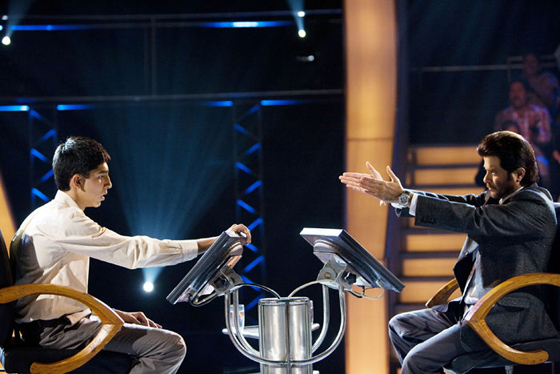
Slumdog Millionaire

Recent winner of multiple awards at the Golden Globes and the Screen Actors Guild Awards, Danny Boyle's Slumdog Millionaire did anything but disappoint. 

Set in Mumbai, the film follows the story of Jamal, a young man from the slums who manages to make his way onto Who Wants to be a Millionaire?.  The popular television show provides the structure for an interesting plot development that fluctuates between present, immediate past, and distant past. 

The stories are intertwined in such a way that the audience becomes increasingly aware that the events from the past are intricately part of what's happening now.  The seemingly random chain of events was not an accident, but rather an elaborate development that fulfills young Jamal's destiny. 

While elements of the film are undoubtedly foreign, the story is crafted in such a way that it's nigh impossible to not develop a connection with the characters as we're pulled through a raw and real display of poverty in India.  Just when the uneasiness seems too much to bear, we're ultimately comforted through a traditional, Americanized-Hollywood ending that was surprisingly sweet following such a nontraditional setup. 

Boyle's visual style was intimate and innovative--his almost exclusive use of close-ups raised the stakes in terms of emotional investment, generating sympathy and compassion and keeping us involved till the end (even through the Horatio Alger-inspired ending).  Every moment revealed new angles, colors, and visual delights that helped make Slumdog a true work of art.

four.

Tuesday, January 20, 2009

Ten Canoes

It's a story told to us, about a story told to the teller, about a story told to someone else.  The intricacies of the narratives and their relationship don't really matter, because really it's a timeless story that reveals everything we need to know about humanity.  The times have changed, but the love, loss, revenge, and peace have not.  The process of the storytelling was so engaging, as we were invited to recognize that we were now a part of the saga that has been passed through generations.  It was an affirmation of stories, the simplest sometimes the most moving and everlasting.  

four.

Thursday, January 8, 2009

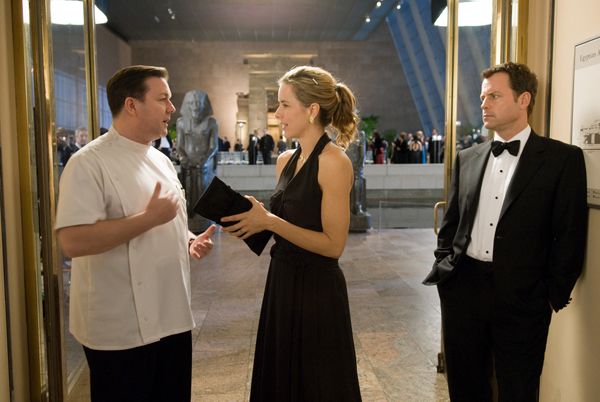
Ghost Town

Gervais is always funny to watch, and this film was no exception. He had me laughing out loud throughout the entire thing, which rarely happens in traditional rom-coms. They did, however, keep to the traditional elements of the genre, both visually and narratively. The story held the familiar set-ups and pay-offs, and the next-thing-coming was usually guessable. I give the film credit, though, for surprising me on more than one occasion--for subtle twists that delivered just the right amount of innovation to the conventional.

three and a half.